Fueling Students for Learning, Focus, and Wellbeing

Bayview Glen News, Lower School, Newsletters and Publications, Prep School, The Glen, Upper School

At Bayview Glen, alongside academic excellence, we recognize that fueling the future is just as important. Nutrition plays a meaningful role in supporting growth and development, as well as the daily demands of student life, including studying, athletics, stress management, and sustained focus.

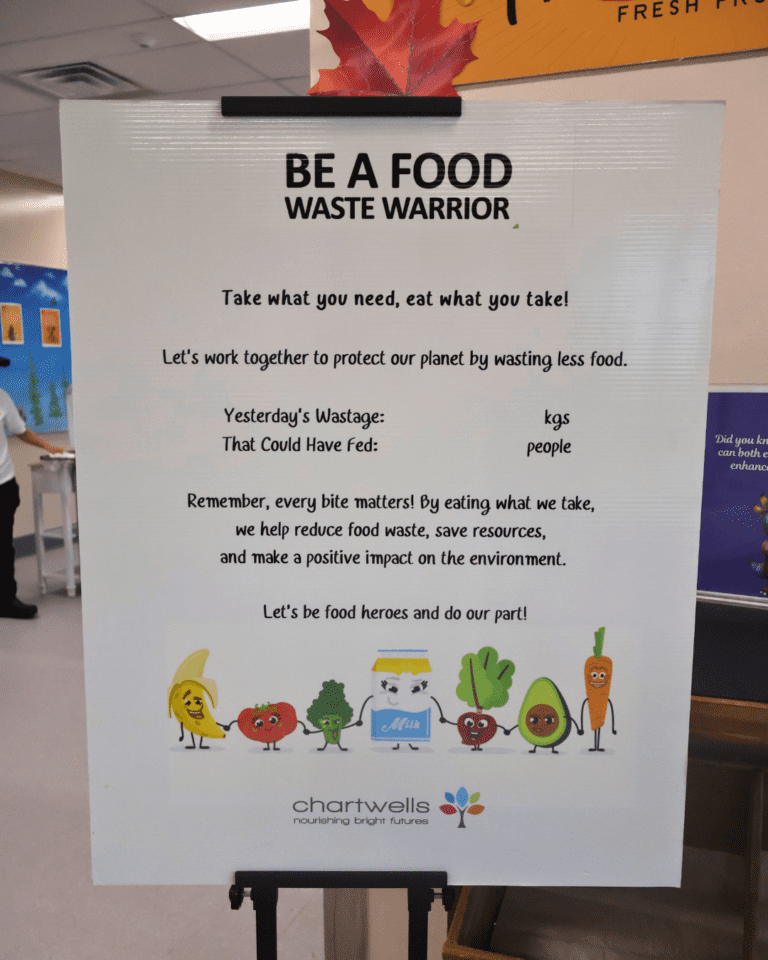
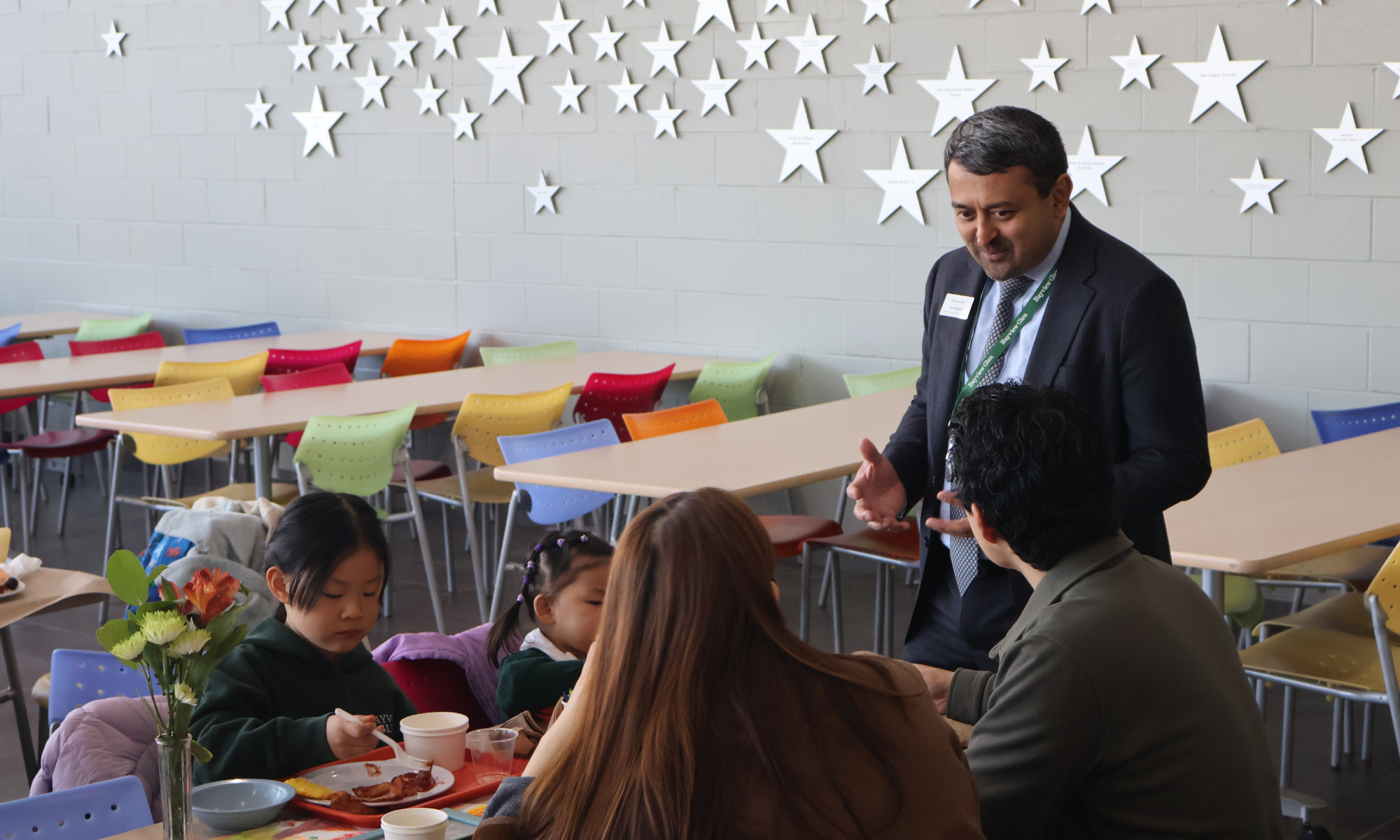
Through our food partner, Chartwells, our daily offerings and wellness programming are intentionally designed to highlight foods and habits that help students feel energized, focused, and supported throughout the school day.

Foods to Support Studying and Focus

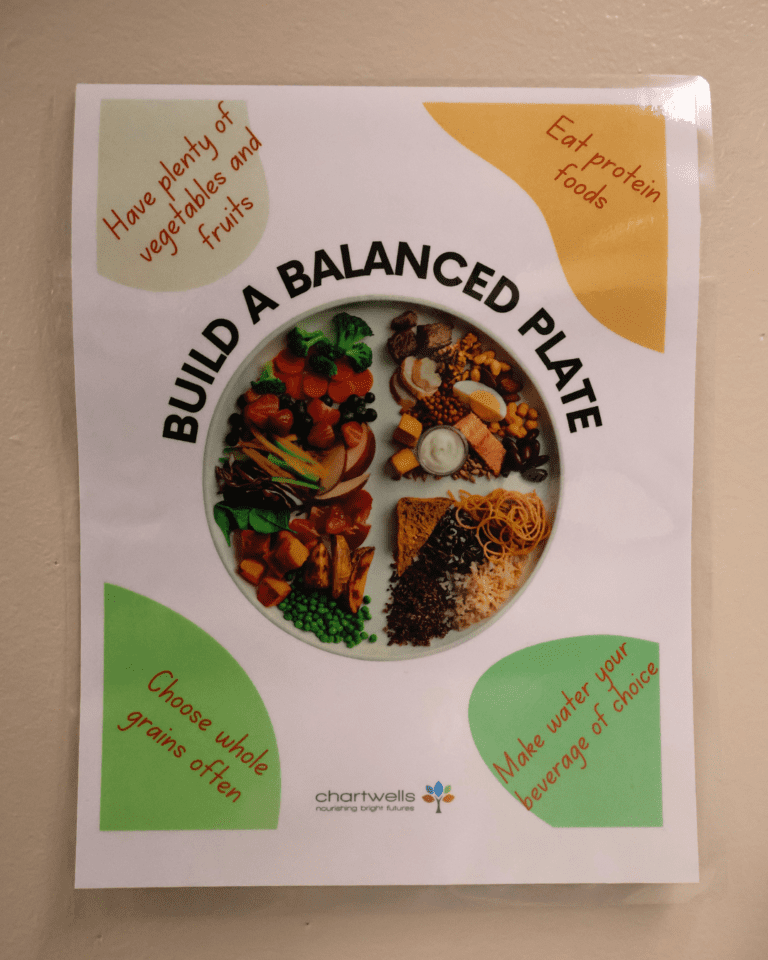
Students need steady energy to remain attentive and engaged. Across our menus and nutrition programming, we emphasize foods that support concentration and sustained energy, including whole grains for lasting fuel, protein‑rich foods to support focus, fruits and vegetables rich in protective nutrients, healthy fats that support brain health, and hydration to help maintain alertness.

Through pop‑ups, student engagement initiatives, digital and print signage, and nutrition workshops, we help students connect these food choices to everyday learning and academic success.

Fueling Active Students

For students balancing academics with athletics, our programmes also highlight foods that support performance and recovery. This includes balanced snacks, carbohydrates for energy, protein‑rich foods, and hydration strategies.

Our sports nutrition programme, Eat to Compete, reinforces these concepts through educational posters, menu identifiers, and practical guidance that helps students understand how nutrition supports active lifestyles.

Nutrition, Wellness, and Lifelong Skills

Busy schedules and academic demands can affect both energy and resilience. Through initiatives such as Boost Days and Wellbeing Week, students explore how balanced meals, regular eating, hydration, and mindful food choices can support well‑being. Broader wellness themes such as stress management, micro‑breaks, and self‑care are also incorporated.

Through interactive food experiences, teaching kitchen activities, and wellness moments, students build practical skills that support focus, mood, and long‑term wellbeing. This spring, students can also look forward to Brain Bites, a new programme focused on simple foods and snacks that support learning and academic success.

Facebook
LinkedIn
WhatsApp
Email
Print

Bayview Glen Robotics on the Provincial and World Stage

Bayview Glen News, Lower School, Newsletters and Publications, Prep School, The Glen, Upper School

ALT-F4: A Blue Banner Season
Written by James K. and Alina D., Grade 10 Students

FIRST LEGO League Innovation and Robotics Programme​
Written by Benjamin McCord, FLL Robotics Co-ordinator

ALT-F4: A Blue Banner Season

Written by James K. (Media – Writer) and Alina D. (Mechanical and Media – Editor),
Grade 10 Students

Humber Polytechnic was an encouraging start to the season for many reasons. It allowed us to grow, and more importantly, allowed us to make tremendous improvements which heavily benefitted us at future competitions.

We started off well and continued to tweak aspects of programming and strategy to refine our gameplay. However, it was a hard-fought battle with us having to look to our incredible strategy and drive team – as well as some luck – for the win! Thanks to our consistency, we also managed to secure our first Quality Design award of the season.

More importantly, Humber Polytechnic was the glue that truly allowed our team to come together and bond for the first time. Moving forward, our first competition allowed us to figure out exactly what we needed to do to strengthen our robot’s performance.

Just a few weeks later, and true to the name of this year’s game, we rebuilt the robot! ALT-F4 arrived at Georgian College with one goal: win. Over the past two weeks, we had completely revamped our robot as a dumper with a wide shooter, allowing it to shoot many balls into the HUB at once. Vanguard’s new design proved itself quickly, but not without a few hiccups along the way.

Throughout the qualifiers, our robot malfunctioned several times due to electrical issues caused by static. By the second day, the robot was functioning and we managed to seed first and become alliance captain 1. We made it through the playoffs undefeated and entered the finals confidently and managed to win once again, earning our second blue banner. This result increased our world placing to 35th out of 3800 teams.

Georgian College event allowed us to test our newly rebuilt robot and gave us confidence for the upcoming provincial championship.

We boarded the bus with aspirations to make this DCMP the best in our team’s history. However, our robot had other plans. Despite our best intentions, we ranked third in our division, becoming the captain of the second alliance. We then started the playoff rounds, which is where the tournament got interesting. Our robot was functioning perfectly thanks to the pit team, which allowed our drive team to implement our game strategy to perfection. This was a full team effort. As underdogs, we prevailed over the number one ranked alliance to bring the division championship home for the first time ever, and it was incredible to see the hard work of the team come to fruition. To win this division we had to compete against some of the top teams in the world.

We then advanced to the Provincial finals where we fought valiantly against some of the best robots (in the top five) in the world. While we came very close to beating them, we unfortunately fell short after two well played matches.

Now we are off to Worlds…stay tuned…

FIRST LEGO League Innovation and Robotics Programme

Written by Benjamin McCord,
FLL Robotics Co-ordinator

ConnecTech Goes Global!
Left to right: Karima K., Luke K., Stefano E., Sarina M., Armaan C., Grace K., Naya C., Ivan W., Eric T., Andrew T., Salima H., Ben McCord

Bayview Glen’s FIRST LEGO League Innovation and Robotics Programme is flying high. ConnecTech, our Ontario Provincial Champions, represented Canada at the FIRST World Festival in Houston—competing among 160 elite teams from over 60 countries.

To learn more about ConnecTech, please visit their website at connectech27757.com, and @connectech27757 on Instagram.

More Tournaments!

Smart Ramen

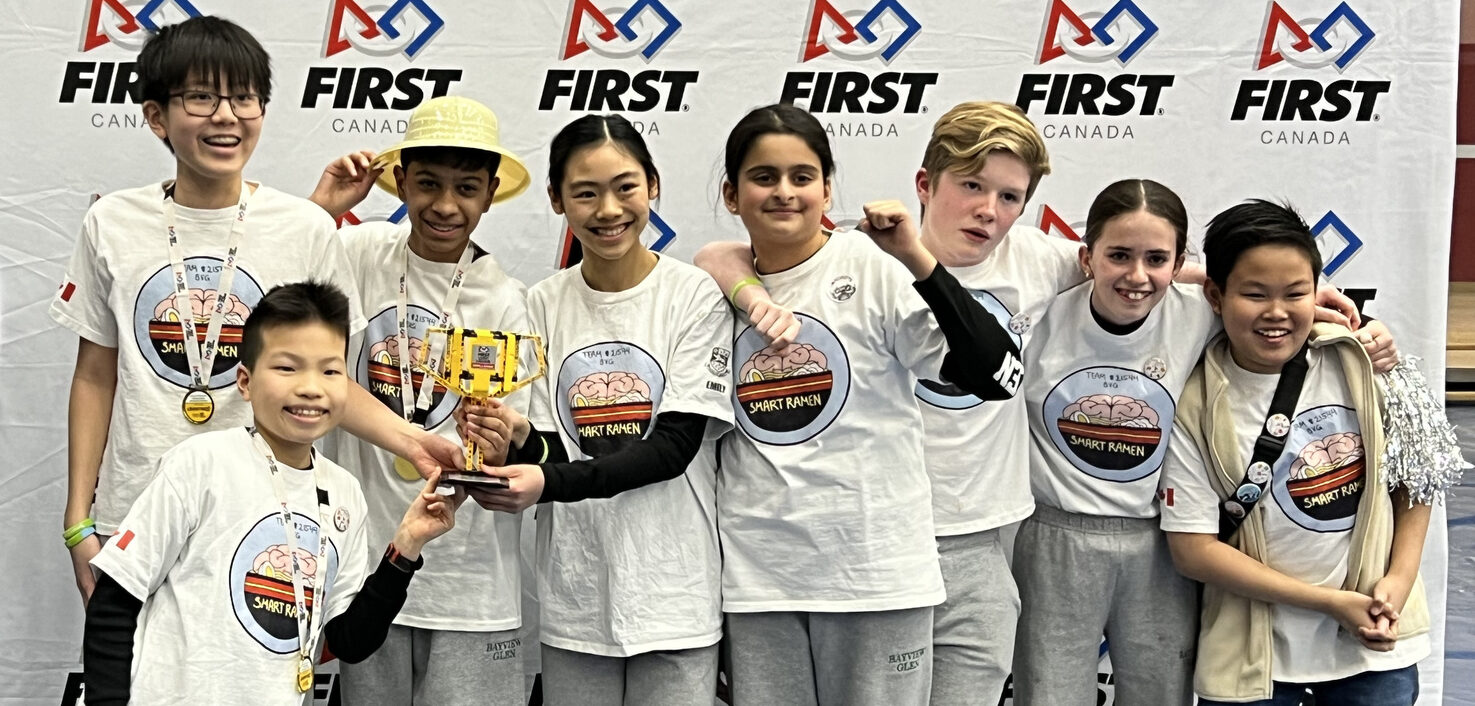
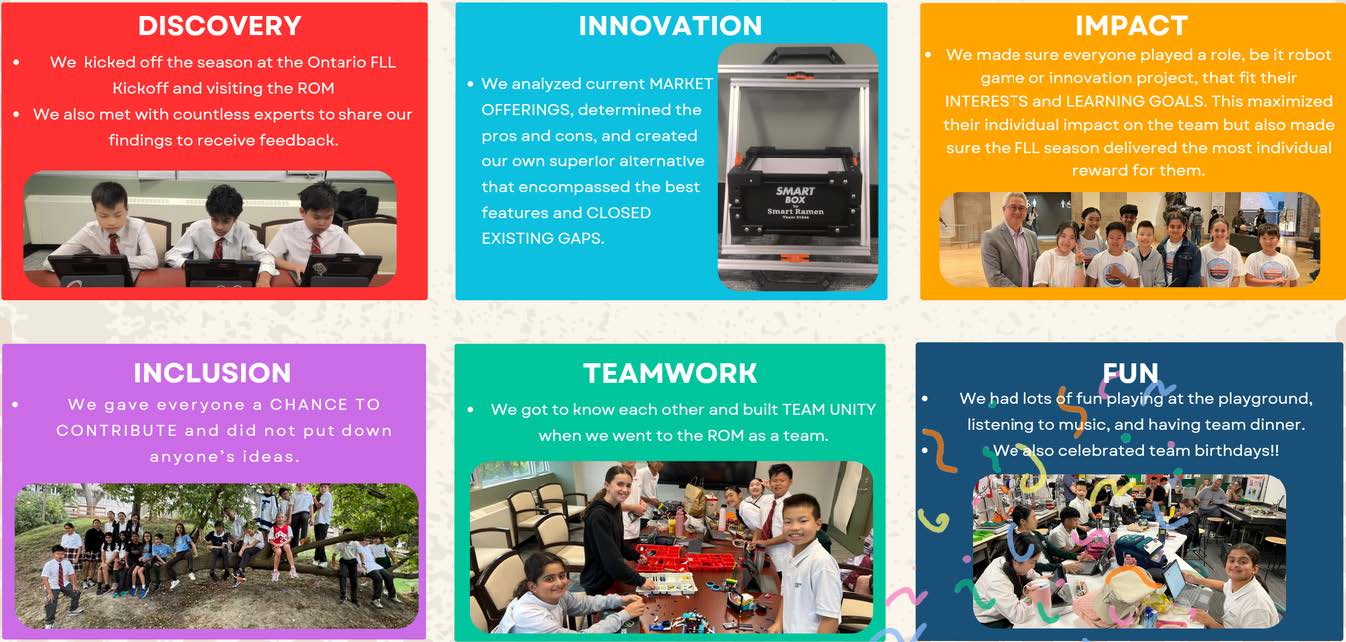
Smart Ramen will compete at the WPI WAFFLE tournament in Worcester, MA, from June 11 to June 14. They won the 2nd Place Champions’ Award at the Ontario Provincials. This is Smart Ramen’s 3rd International Tournament in 3 years.

To learn more about Smart Ramen, please visit their website at https://smart-ramen-21544.com/

Operation CREAT3

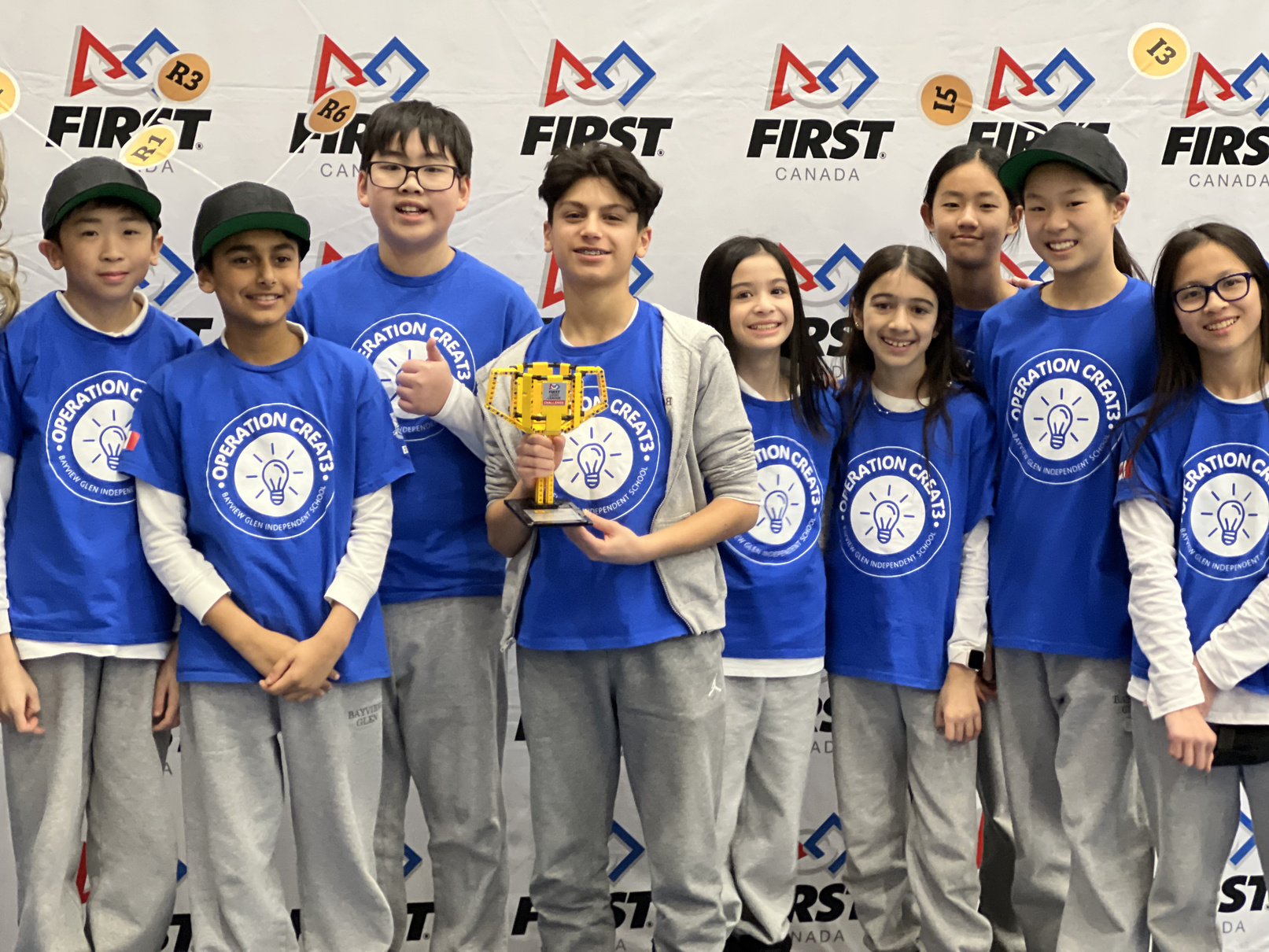
Operation CREAT3 will compete at the Canada Cup at Brock University from June 17 to June 20. They won the 1st Place Core Values Award at Provincials, and will showcase their Innovation Project, Artifact Armada.

Left to right: Ethan X., Eesa R., Elgan Y., Adrian S., Ava F., Hayley A., Jaime S., Jaime S., Emma T.

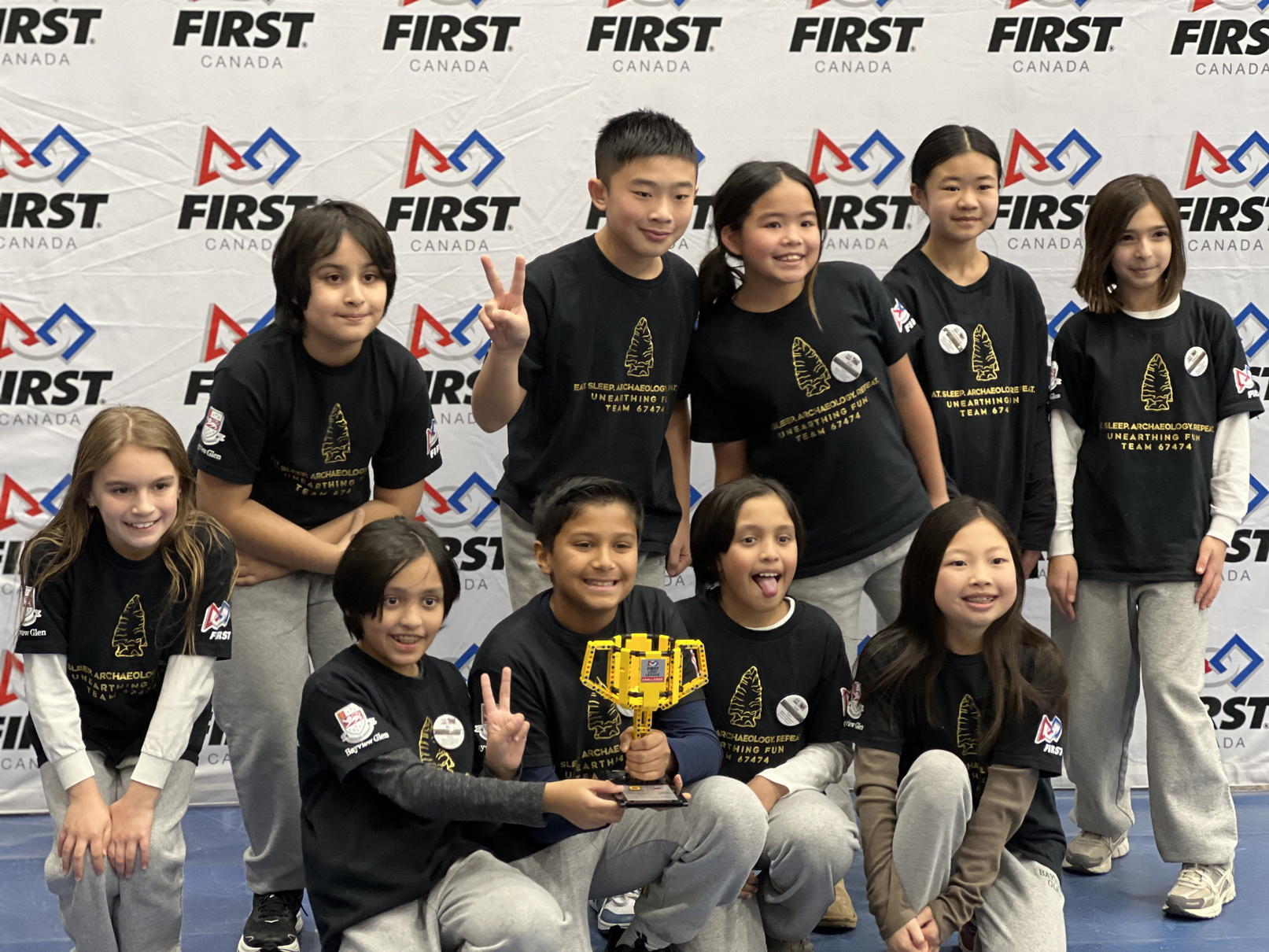
Eat. Sleep. Archaeology. Repeat.

Our Grade 5 Team, Eat. Sleep. Archaeology. Repeat., will compete at the Canada Cup at Brock University from June 17 to June 20. They won the 1st Place Innovation Project Award at Provincials, and have been mentoring Grade 4 students in the Winter and Spring.

Back: Victoria O., Vihaan S., Maximus K., Zoe L., Francesca C., Elmira S. Front: Max M., Neel R., Leo M., Emmy C.
Winter/Spring FLL Intramurals

FLL Intramurals are underway this Winter and Spring—building skills and sparking early interest in robotics and innovation. Our Intramural teams engage in all of the challenges that our Competitive teams do: Innovation Project, Robot Design and Game, and Core Values. Team Smart Ramen (along with ambitious ESAR members Zoe Lieu and Emmy Chung!) shared their time and experience to lead the teams through their journey.

Team Smart Ramen Dedicated to Mentorship of Intramural Teams
FLL Supports Girls in STEM

Bayview Glen Is dedicated to promoting girls’ engagement and achievement in STEM. Girls make up more than half of our FLL students.

2026/2027 Competitive Season Tryouts

All students who wish to be considered for membership on a Fall Competitive team must conduct a tryout. Tryouts will begin in late May. More information about tryouts will be coming soon. Please contact FLL programme supervisor Ben McCord (bmccord@bayviewglen.ca) with any questions.

Facebook
LinkedIn
WhatsApp
Email
Print

Dive Into Summer 2026 at Bayview Glen Camp

Bayview Glen News, Newsletters and Publications, The Glen

Written by
Daniel Garfinkel, Camp Director
Kayley Core, Assistant Camp Director

As the snow begins to melt and the days grow brighter, it’s hard not to think of the sunny summer days ahead. With summer quickly approaching, we want to know—have you finalized your plans for the upcoming season?

If not, we invite you to consider Bayview Glen Camp for your children.

This summer is shaping up to be an incredible one, filled with endless fun, new experiences, and lasting memories for our campers.

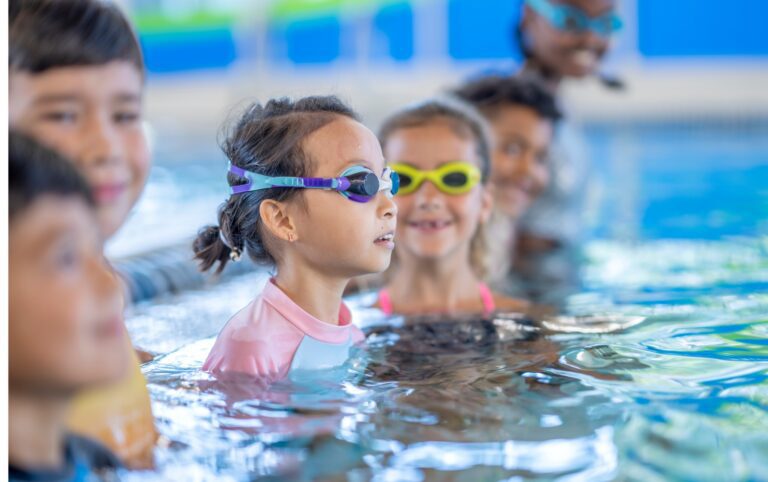
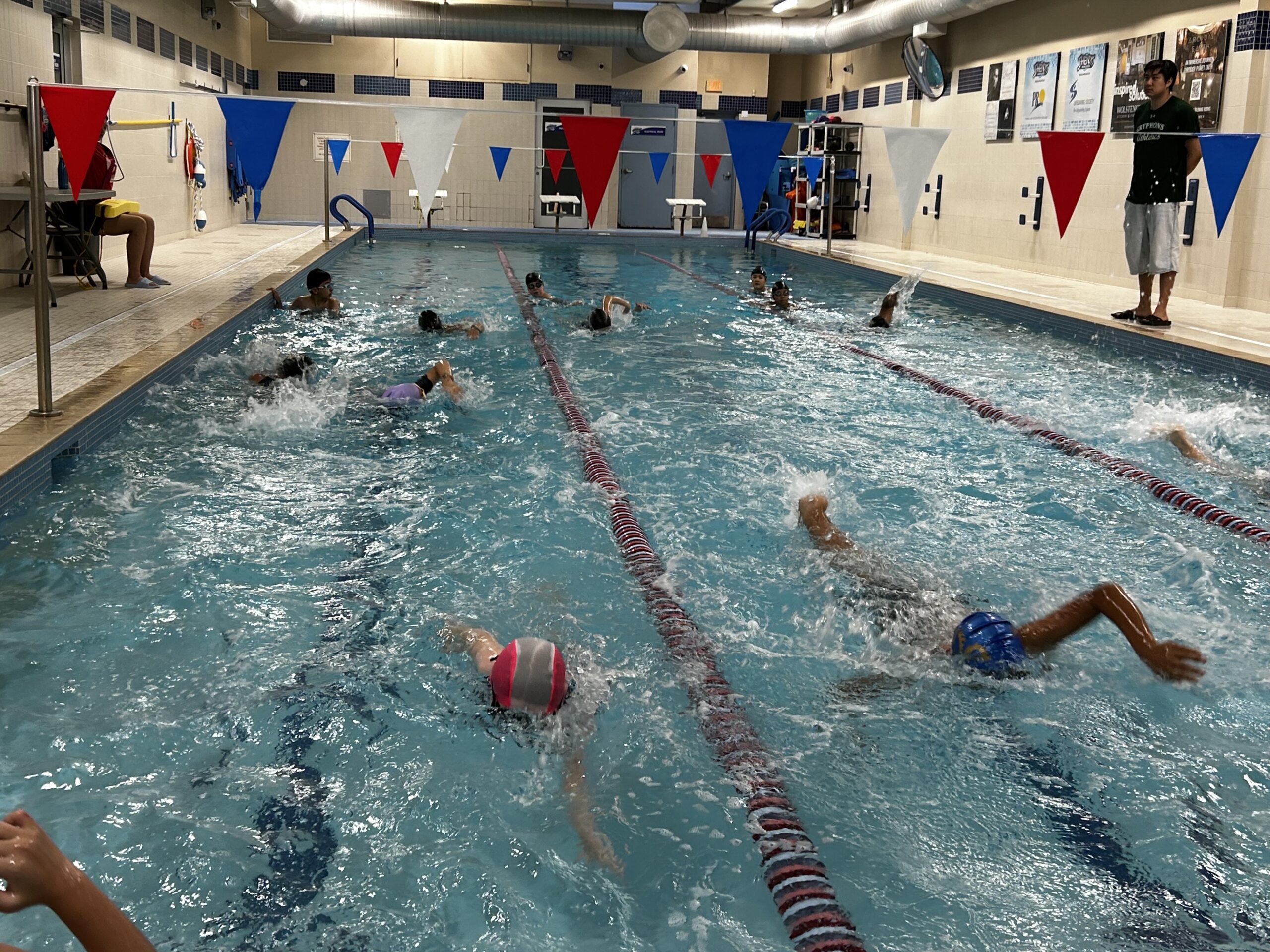
One of the most exciting additions to our programming is swimming. Campers will be among the first to enjoy our brand-new indoor pool. Our swim programme will be led by trained lifeguards and certified instructors, and campers will participate in a daily instructional swim to help develop their skills, build confidence, and achieve their personal swimming goals.

We’ve made some exciting updates for the upcoming season. This summer will be one week longer, allowing for even more time at camp to learn, grow, and experience new activities.

Our session format has also been updated. We are now offering two-week session blocks for Summer 2026. Our session options include:

  • 2 weeks
  • 4 weeks
  • 6 weeks
  • 8 weeks

We will continue to offer a wide variety of programmes, including science, cooking, sports, and the arts, giving campers the opportunity to explore new and innovative activities.

Facebook
LinkedIn
WhatsApp
Email
Print

Perfectionism: Supporting Wellbeing Alongside Achievement

Bayview Glen News, Lower School, Newsletters and Publications, Prep School, The Glen, Upper School

Written by Antoinette Morgan, MA, MSW, BSW, RSW,
Director of Student Wellbeing

In the independent school environment where performance expectations, academic rigor, and university preparation are emphasized, perfectionism can quietly become ingrained in students. Whether a child is in Grade 1 or Grade 12, perfectionism can sneak into their school life, leading them to believe that only perfect work is good enough. Recognizing perfectionist tendencies is key to helping students flourish and stay resilient over the long term.

There are many causes that lead to perfectionism in students, including a competitive school environment; trauma or fear of rejection; a child’s attempt to manage pressure and to maintain adults’ approval; cultural expectations around success and the image they or their parents want to project; the impact of social media; and social comparison. A child’s early experiences and the messaging they receive around success and self-worth influence perfectionism, as do adults who overpraise high marks or outcomes, or who dismiss a good mark by asking why the child did not score higher. Many students come to equate their self-worth with performance.

Research shows perfectionistic patterns can appear in the early years and interfere with a student’s learning and wellbeing. These students may display all-or-nothing thinking, strongly insisting on doing things “just right”. They often have an intense fear of making mistakes and may react with strong emotions or behaviours when things do not turn out as expected. They may constantly erase and re-do their work, tie their self-worth to minor setbacks, or avoid starting tasks they find challenging for fear of not getting them right. These responses are rooted in anxiety and are not related to defiance or lack of effort. 

Perfectionism is not the same as healthy striving, which is built on motivation, flexibility, and a growth-mindset. In older students, perfectionism is often visible in rigid standards paired with harsh self-evaluation. This may include not allowing themselves to make mistakes; excessive checking and editing, difficulty asking for help or delegating tasks; excessive worry about grades and feedback; wanting to retake a test despite already achieving a high score, staying up late every night studying; and ultimately risking burnout.

Although perfectionists are detail-oriented, reliable, and high-achieving —qualities that can be beneficial in the short term — over time, they can bear significant emotional and psychological costs. Chronic perfectionism is associated with increased anxiety and stress, burnout, depression, low self-esteem, and avoidance behaviours such as procrastination or refusal to try. Over time, it can also limit creativity and resilience.

 How can parents help:

  • Set flexible and realistic goals and expectations
  • Praise growth, persistence, and effort over outcomes
  • Normalize mistakes as a part of growth and development
  • Validate children’s stress before offering solutions
  • Reinforce that self-worth is not based on achievement
  • Teach children self-acceptance
  • Model flexibility and self-compassion

By responding thoughtfully to perfectionism, the school and families can work together to support students in developing their resilience and flexibility, so they are grounded in learning and not fear. Please reach out to me at amorgan@bayviewglen.ca for support or referrals.

Spring Book Club and Fireside Chat

Date
Wednesday, May 27, 2026

Book Club Detail

  • Time: 5:00 – 6:30 p.m.
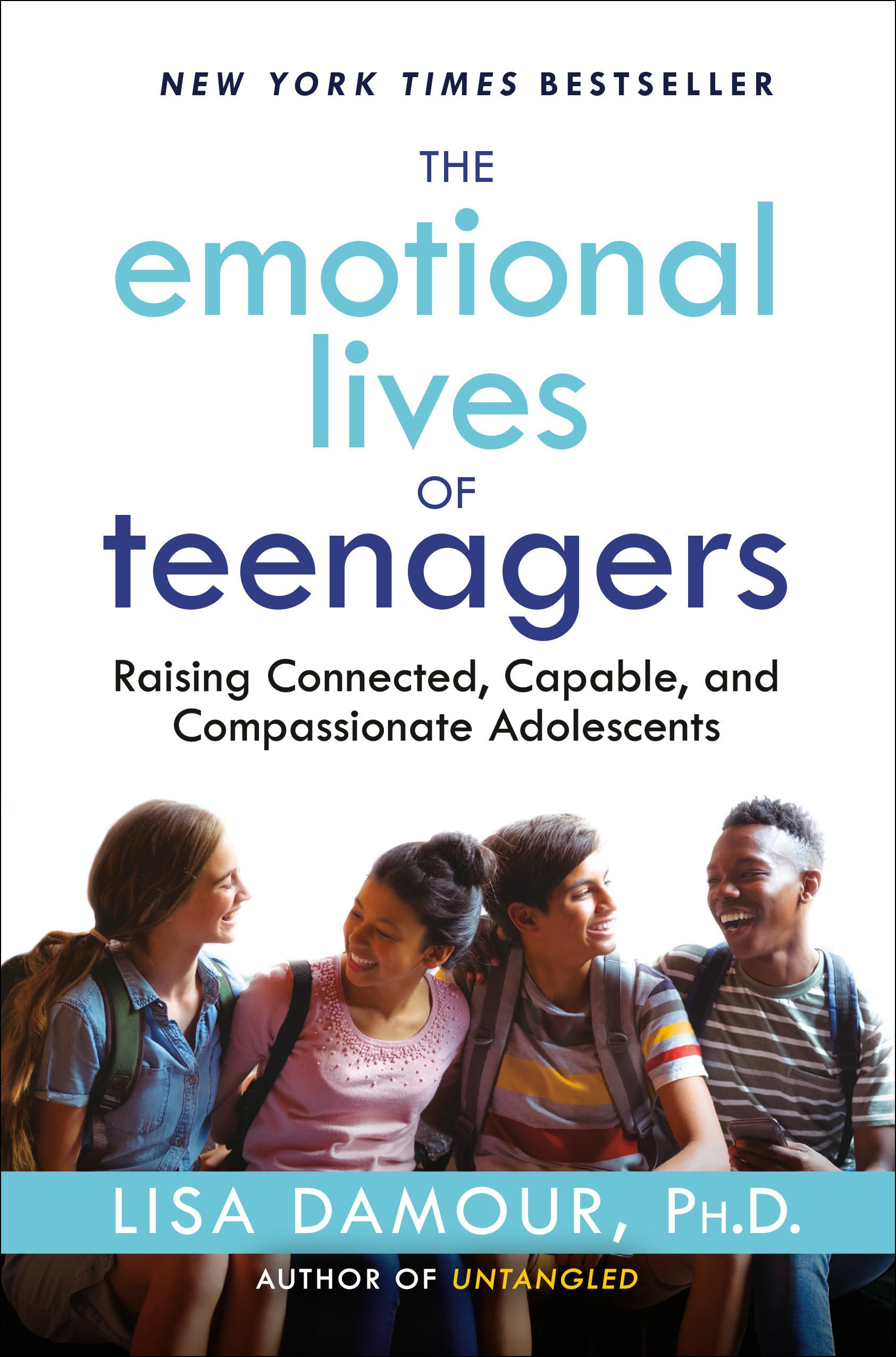
  • Book: The Emotional Lives of Teenagers: Raising Connected, Capable, and Compassionate Adolescents by Lisa Damour, PhD.

Fireside Chat Detail

  • Time: 6:30 – 8:00 p.m.
  • Topics:
    Parent-Child Relationships: Better Conversation and stronger Connections
    Talking through tension, Conversations that Build, not Break
    Building the parent-child gap
  • Speaker: Kausalya Vimal
Facebook
LinkedIn
WhatsApp
Email
Print

Growing With Purpose: Looking Back, Reaching Out, and Moving Forward Together

Alumni, Bayview Glen News, Lower School, Newsletters and Publications, Prep School, The Glen, Upper School

Written by Ryan Rodrigues,
Executive Director, Advancement and External Relations

One of the great privileges of my role is the opportunity to listen closely to our community – students, parents, alumni, past parents, and partners – and to notice the patterns that emerge when people feel connected to something meaningful. Over the past year, and especially in recent months as I have represented Bayview Glen at chapter events across Canada and into the United States, I have been struck by how widely our community now stretches, and how strong those connections remain.

At each gathering, I hear familiar themes echoed back to me: a sense of purpose rooted in learning, gratitude for relationships formed here, and a desire to stay connected across generations. These conversations mirror research often shared in educational leadership spaces, including work from Harvard’s Student Purpose Initiative and innovation-focused institutions such as Future Design School. At their core, these frameworks ask a simple but powerful question: how do we help young people, and the communities that surround them, see themselves as part of something larger, something sustained over time?

At Bayview Glen, we are fortunate to see that answer unfolding every day.

Earlier this year, I had the honour of representing Bayview Glen at the Independent School Summit of the Canadian Council for Advancement of Education, where I shared reflections on how our students, parents, and alumni shape not only our present campus experience, but also the pathways that allow future generations to grow and thrive. Our Strategic Plan, Be Bold, speaks directly to this work. It calls us to act with intention, to recognise our responsibilities to one another, and to honour the original Nations of this land and their enduring presence.

That continuity feels especially meaningful as we begin planning for a significant milestone: Bayview Glen’s sixty-fifth anniversary. Over the next academic year and throughout 2027, we will mark this moment with opportunities for reflection and celebration. Anniversaries invite us to look back with care, not nostalgia, so that our past can inform who we are becoming.

In that spirit, we are strengthening our archival efforts at the School. Preserving Bayview Glen’s history allows us to tell a fuller, more inclusive story about our shared journey. Photographs, programmes, letters, uniforms, and personal recollections all play an important role. If you or someone in your family has materials or memories to share, we would be grateful to hear from you.

At the same time, we are looking ahead. Our New Build is nearing completion, and we look forward to celebrating this exciting addition to campus life with our community this spring and into the fall. Reunion Weekend and renewed engagement with Grade Twelve parents and past parents remain key moments of connection.

As we look ahead to our anniversary celebrations and beyond, I am reminded that institutions grow strongest when people see themselves as active participants in a shared story. Thank you for continuing to shape that story with us, wherever in the world you may be.

Meet Our Archivist

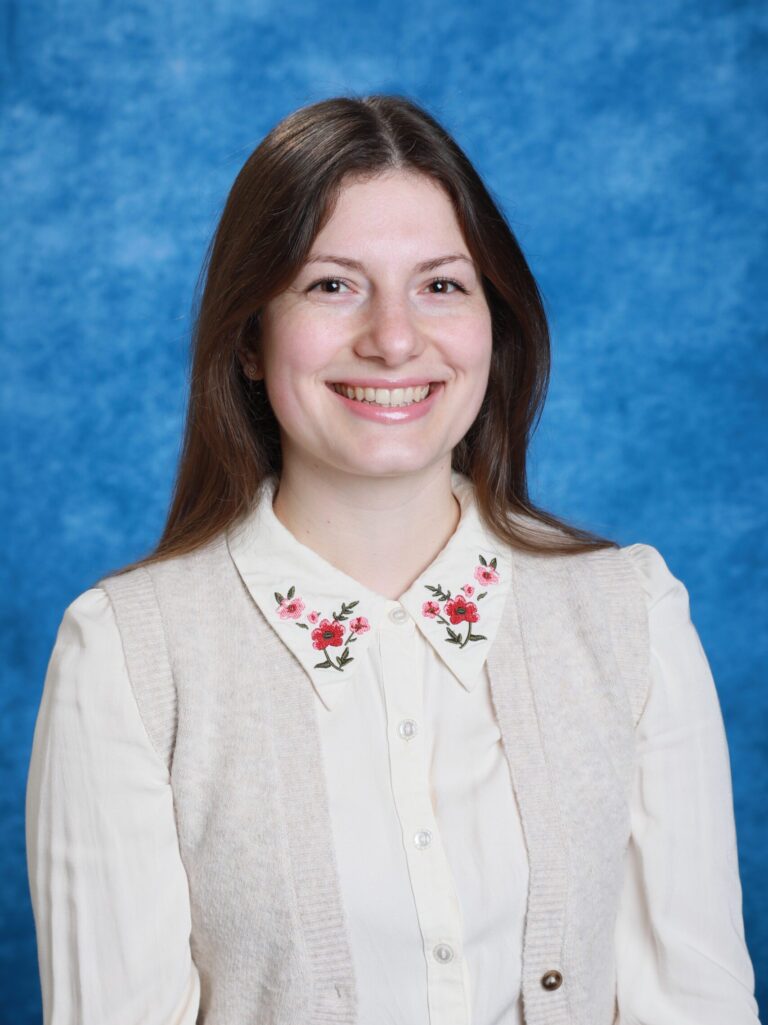
As Bayview Glen prepares for its sixty-fifth anniversary, we are pleased to welcome Andriana Gialiris, our new Archivist. Andriana is leading the School’s efforts to preserve and share Bayview Glen’s rich history, working closely with students, alumni, past parents, staff, faculty, volunteers, and current families. If you have photographs, memorabilia, or stories you would like to contribute to our archives, we encourage you to be in touch. Your memories help bring our shared history to life. 

archives@bayviewglen.ca
bayviewglen.ca/about-us/history-and-archives/

Facebook
LinkedIn
WhatsApp
Email
Print

Celebrating Student Innovation at the Toronto Science Fair 2026

Bayview Glen News, Lower School, Newsletters and Publications, The Glen, Upper School
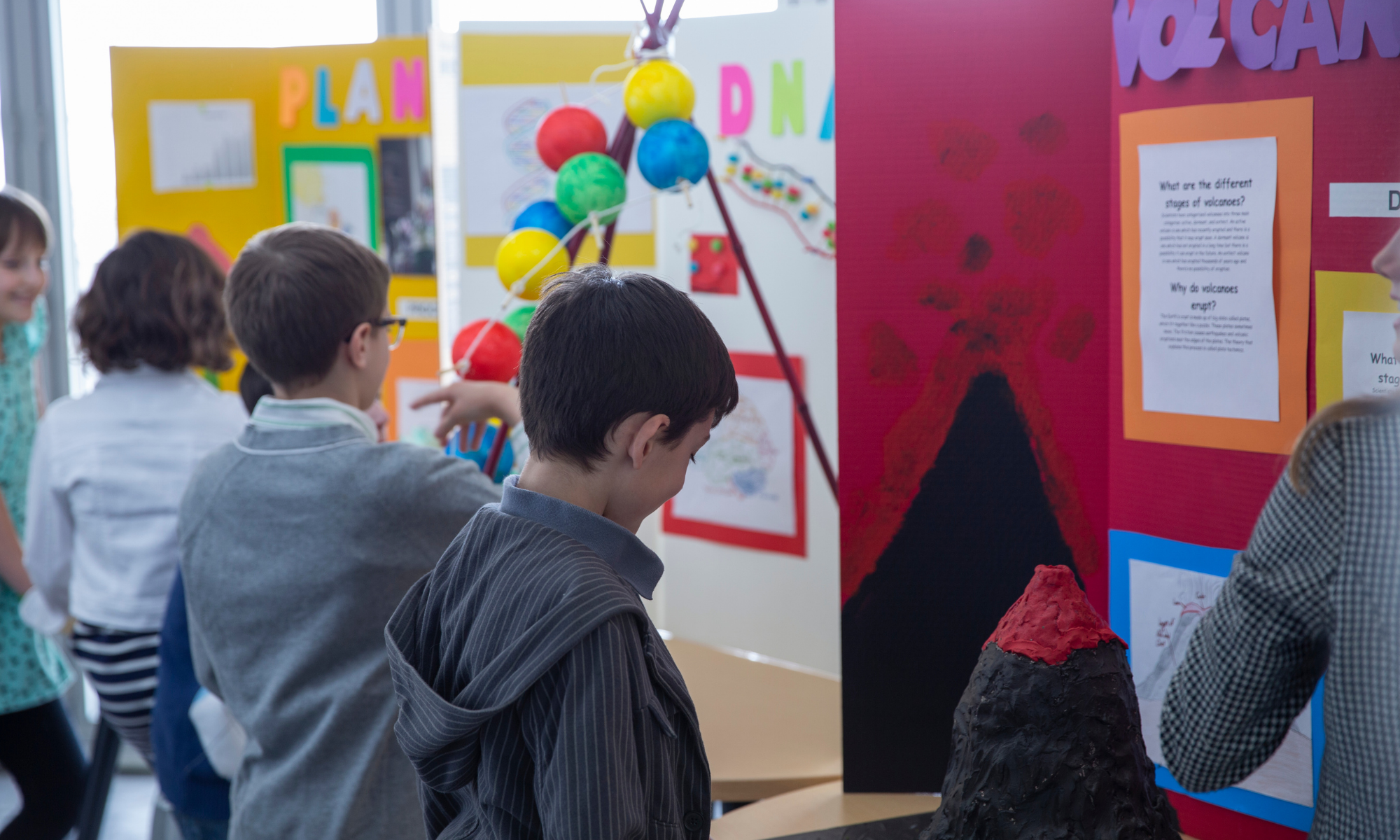
Bayview Glen students proudly shared their passion for science and innovation at the 2026 Toronto Science Fair, one of Canada’s largest and most prestigious student science competitions. From gold medal–winning Upper School innovation to thoughtful and creative Grade 5 investigations, our students demonstrated curiosity, perseverance, and the power of scientific thinking.

Upper School Gold Medal Innovations with Real-World Impact

Grade 5 Scientists Embrace Experimentation and Innovation

Upper School Gold Medal Innovations with Real-World Impact

Stefano E.,Grade 11 Student

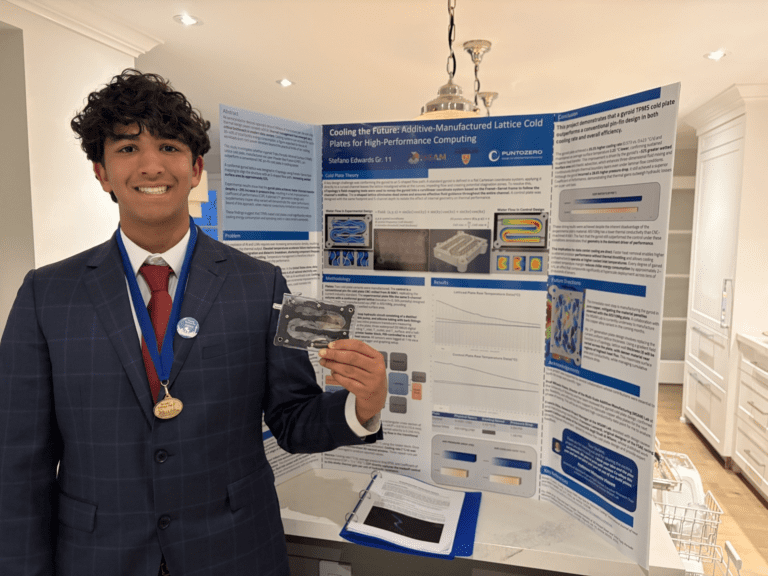
Cooling the Future: Lattice Cold Plates for High-Performance Computing

Data centers spend up to 40% of their energy on cooling alone, a problem that’s accelerating with the rise of consumer AI. For my research project, I set out to find a more mathematically optimal alternative to the industry-standard CNC-milled cold plate.

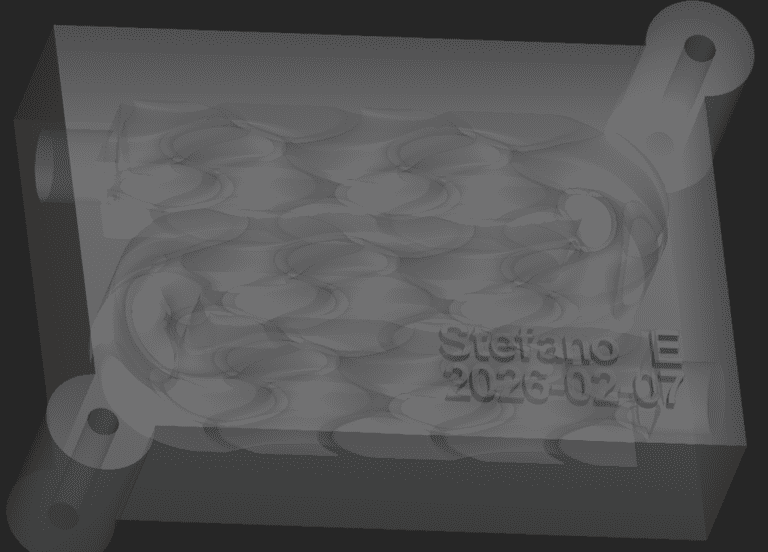
The answer was a Triply Periodic Minimal Surface called a gyroid lattice. Unlike conventional straight-channel designs, a gyroid agitates fluid in all three dimensions simultaneously, continuously disrupting thermal boundary layers while maximizing surface area. I taught myself nTopology to design and simulate the plate geometry, then built a closed-loop hydraulic data logging circuit to run controlled experiments. The gyroid plate delivered a 36% higher cooling rate, 2.25°C lower sustained surface temperature, and 52% greater total surface area than the control.

The project earned Gold at the citywide Toronto Science Fair! I’m grateful to Professor Mihaela Vlasea and her Multi-Scale Additive Manufacturing Laboratory at the University of Waterloo for their advice, and I look forward to collaborating with them as I push this research further, and potentially toward a published research paper.

Riya V. and Shaan V.,Grade 11 and Grade 9 Student

BrAIllePath

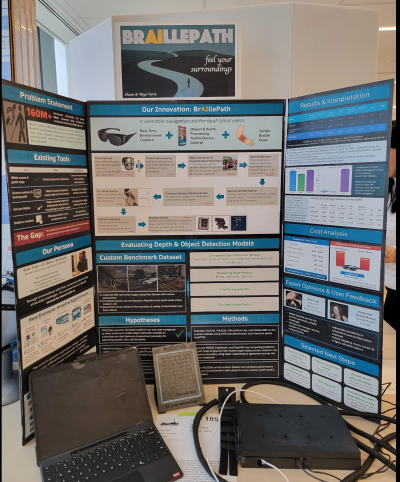
We are Riya and Shaan, and we recently developed BraillePath, a wearable navigation aid designed for the deaf-blind community. Our project addresses a critical gap: while many tools exist for single-sensory loss, few provide real-time environmental awareness for those without both sight and sound.

BraillePath uses smart glasses with a camera to capture the user’s surroundings, which is then processed by AI models we fine-tuned to detect obstacles like cars and people. This data is converted into tactile braille cues on the user’s wrist. For example, if a car approaches from the left, BraillePath displays a braille character on the wrist indicating a vehicle approaching from that direction. Developing this required a multi-disciplinary approach, combining circuitry, mobile app development, and numerous iterations of 3D-printed prototypes.

A highlight of our journey was receiving feedback from Sven Topp, a deaf-blind researcher from Germany. His insights into daily navigation challenges helped us refine our design. Moving forward, we hope to actually develop our project further and test it with deaf-blind individuals! We are honored to share this innovation with the Bayview Glen community!

Grade 5 Scientists Embrace Experimentation and Innovation

Zoe,
Grade 5 Student

Since the start of the year, I have been looking forward to trying out for the Toronto Science Fair, and it has been a pleasure to be able to represent the school while learning about science. This year, Grade 5 students like me were able to have the opportunity to try out for the Toronto Science Fair with no guarantee of getting picked. Only two teams were selected to represent the school. It was truly competitive! Many students tried out with the choice of having a partner or going solo, and only two teams got to make it in. To be chosen among the many creative entries across Grade 5 to represent the school has been such a privilege, and on top of that, I got to learn all about the scientific method and challenge my brain outside the school curriculum.

My project was called “The Battle of The Germs: Mom VS. Zoe”. My idea was about a nasty pillow (according to my mom) and a grueling, disgusting, and just gross in general toilet seat. Now before I started, I needed a hypothesis, which honestly wasn’t that hard. My hypothesis was that by the end of the five-day swabbing period, the toilet seat would be dirtier than my pillowcase.

For my experiment, I swabbed both the toilet seat and my pillowcase and observed the germ growth on a petri dish for over five days. Each day, I checked to see how much and how fast germs (also known as “microbes”) were growing. It was cool (and a little disgusting!) to see how fast these microbes grew and how these germs changed over time in size, color, and appearance. I tried to be very careful in documenting my observations, ensuring everything was recorded daily and in detail, and that everything was accurate to the point in which I could draw an accurate conclusion.

One of the most exciting parts of this experience was seeing whether my hypothesis would be proven right or wrong. As the days went on, I noticed that both the toilet seat and the pillowcase showed signs of microbial growth, but not always in the way I expected. Some days had more noticeable changes than others, which made me realize that germs can grow differently under different conditions and are not always predictable. By the end of the five days, I carefully compared the results and analyzed which surface had more growth overall. This helped me understand the importance of observation, patience, and keeping detailed records in a scientific experiment.

Overall, participating in the Toronto Science Fair was an unforgettable experience that taught me a lot about science and about myself. I learned how to think like a scientist by asking questions, making predictions, and testing ideas through experiments. It also showed me that while science experiments are very serious, they can also be fun, surprising, and even a little gross at times.

Neel R.,
Grade 5 Student

This year, I had the chance to take part in the Toronto Science Fair, representing Bayview Glen at the regional competition. It was a pleasure to participate in the Science Fair while educating myself about the world of science. In late January, I competed at the Bayview Glen Lower School fair with my fellow Grade 5 peers. I was fortunate to have my project selected as one of two submissions to advance to the regional fair.

Unlike traditional science fair projects, I chose to do an innovation project. I decided to create an innovation project because I like building, iterating, and solving problems. Another reason for this decision was that when you work on this type of project, you apply what you learn from your research to the real world. While thinking about project ideas, I came across the problem of food wastage. I realized that worldwide food waste is a serious and growing problem. According to the United Nations Environment Programme Food Waste Index Report 2021, an estimated 931 million tons of food are wasted globally each year. I set out to build a solution that would reduce household food waste.

I built FoodTech, an AI enhanced kitchen technology that helps families turn existing food into new recipes. By using the existing food items and suggesting recipes, FoodTech reduces food wastage, saves money, and makes meal planning easier. I believe FoodTech can meaningfully reduce household food wastage and promote smarter, more sustainable meal habits.

Here is how FoodTech works: The user selects food items from their fridge and/or pantry to use for meal planning. These items are placed under a compact camera. The image captured by the camera is then analyzed. Once the food items have been identified, FoodTech will display recipes using the ingredients.

Some benefits of FoodTech are:

  • New Recipe Ideas: Families will have new recipes to add to their collection.
  • Family bonding: FoodTech can help families make meals together. This gets kids away from screens and working together as a family.
  • Child Development: FoodTech assists children in learning how to cook with easy-to-understand recipes using foods in their kitchen
  • Cost Saving: This innovation can save money that is spent when going out for meals.
  • Protecting the Environment: Food waste that breaks down in landfill releases methane. This gas is a big player in climate change. FoodTech will reduce household food wastage, which can help control climate change.

In conclusion, I really enjoyed participating in the Toronto Science Fair and representing Bayview Glen. While competing in this competition, I learned about the steps to innovation and about the life of a scientist. I hope to continue to partake in science fairs and to discover how science can shape our world.

Facebook
LinkedIn
WhatsApp
Email
Print

Planning Ahead: Supporting Upper School Course Selection

Bayview Glen News, Newsletters and Publications, The Glen, Upper School
Written by Leen-Jan van ‘t Hof,
Director of Teaching and Learning, Upper School

While it feels as though the next school year is still far in the distance, students in the Upper School are already thinking ahead about the choices they are planning to make for their next academic year. We started 2026 with Course Selection Evenings that support our students and their families in making these important choices.

We believe that providing clear and practical information is crucial for making informed decisions, so during these evenings, Faculty provided information and answered questions. Students were available to share their experiences in the wide variety of courses that Bayview Glen offers in the Upper School.

At Bayview Glen, we offer the Ontario curriculum, and students in Grades 11 and 12 have the option of choosing one or more AP courses that prepare them to take the Collegeboard AP exams. We are proud that our AP student results at Bayview Glen exceed the Ontario and global averages across all core subjects.

Building a strong partnership ensures our students are set up for success in pursuing their post-secondary pathways. That is why students in the Upper School are assigned a University Guidance Counsellor at the start of Grade 9 who will stay with them all the way through the Upper School. Our University Guidance Counsellors have access to all current information needed to maximize success for university acceptance. They guide students in making choices in the Upper School that will advance acceptance into the post-secondary programmes of their choice.

Please reach out to Mr. David Zutautas, Director of University Counselling (dzutautas@bayviewglen.ca), or Mr. Leen-Jan van ‘t Hof, Director of Teaching and Learning, Upper School (ljvanthof@bayviewglen.ca) if you have questions about post-secondary planning or our curriculum in the Upper School.

Facebook
LinkedIn
WhatsApp
Email
Print

Athletic Updates: CISAA & OFSAA Fall Championships

Athletics, Bayview Glen News, Newsletters and Publications, The Glen, Upper School
Written by Kevin Neville,
Director of Athletics, Upper School

What an amazing fall term for our Gryphon athletes!

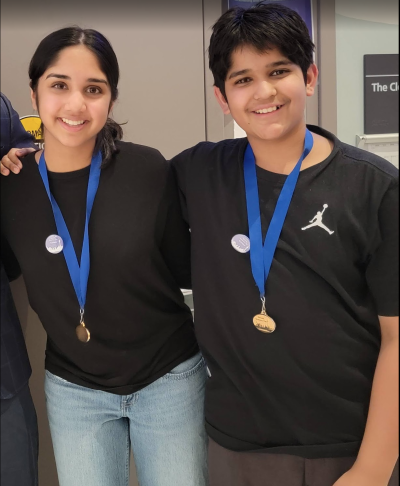
Congratulations to all the teams and individuals who won medals, and thank you to the coaches for making these experiences possible.

CISAA Sr Boys DII Soccer
GOLD

CISAA Jr Boys DII Soccer
GOLD

CISAA Jr Boys DII Volleyball
GOLD

CISAA Sr Girls XC 5K – Brianna L.
GOLD

CISAA Novice Boys XC 3K – Kyle L.
SILVER

OFSAA Sr Tennis Open Mixed Doubles – Isabella W. & Luke B.
SILVER

Facebook
LinkedIn
WhatsApp
Email
Print

Growing Compassion in the Prep School

Bayview Glen News, Newsletters and Publications, Prep School, The Glen
The Impact of Philanthropy for Prepsters
Written by Emilie I., and Bianca M., Co-Heads of Community Outreach, Prep School Student Council

Making a Difference Has Made All the Difference
Written by Lizzie L., Tamira M., Claire M., and Bianca P., Members of the Campaign of Compassion Delivery Team

The Impact of Philanthropy for Prepsters

Written by Emilie I., and Bianca M.,
Co-Heads of Community Outreach, Prep School Student Council

Why is philanthropy important? It can help provide a sense of reality for many people, especially children and people around our age. Giving and seeing the impact you make on people’s lives can completely change your world view. It is a meaningful, and necessary part of life. Doing so without a thank you is much better than receiving acknowledgement. If you don’t receive a thank you, it allows you to truly give without doing it for a reward.

Why is this important for young people? In learning the importance of service, the next generation will become a more inclusive, respectful, and compassionate group who truly have the opportunity to make a difference. Service during youth builds confidence and character and can lead to stronger communities in the future. It can also create many life skills that will help people significantly in the future, including teamwork, leadership, collaboration, and empathy.

In our recent experience at the Lumenus Community Centre and the North York Harvest Food Bank, we found the joy of giving without acknowledgment or thanks. We also learned truly just how lucky we are, and how meaningful true giving really is. Service is something that everyone should take part in. Giving back to your community can bring you one of the best kinds of feelings. It inspires you to make a difference in people’s lives and requires so little. Whether you are donating your time, your food, your money or anything else, it all makes a huge difference, in so many people’s lives.

Even if your donations seem small, the impact they make on people’s lives is greater than you can possibly imagine. As the school year continues, please keep donating and engaging in service, as every donation and act of kindness, no matter how small, can change a life.

Making a Difference Has Made All the Difference

Written by Lizzie L., Tamira M., Claire M., and Bianca P.,
Members of the Campaign of Compassion Delivery Team

Hello everyone! We are the team that took part in the Better Beginnings donation drop off. On this trip, our mission was to help other people, give back to the community, and bring some warmth to their holiday season.

On December 15, we took a trip to the Lumenus Community Centre and the North York Harvest Food Bank to donate all your thoughtful items to the families each class was assigned. We got to see behind the scenes of how the donations are delivered. We will share our experiences with you and how we connected with the community.

We started the day by loading vans and buses with donation boxes from the Lower, Prep, and Upper Schools. Then, we took a bus to the Lumenus Community Centre to begin handing off the boxes to individuals and their families. We got to see the genuine and very heart-warming reactions of each person. Before we left, we got an in-depth tour of the community centre. We got to see their early-on program, the autism learning centres, and we learned about the residential program. We then took another bus to the North York Harvest Food Bank, where we met with staff who showed us how the sorting works. We learned some fascinating statistics helped by unloading all the Bayview Glen food donations, which was a lot! Great job everyone! 

Here are some first-hand experiences that were reflected on after the trip: 

“We met some of the families and staff there, and it was amazing to see the difference that community support makes in people’s lives.”

“Being there helped us understand that donating isn’t only about giving food. it’s about giving people comfort, stability, and hope.” 

“When we visited North Harvest Food Bank, seeing the shelves filled with food donated by our school was such a proud moment. We learned how the donations are sorted and distributed, and just how many families rely on that food every day. It really opened our eyes to how important these drives are.”

We are so grateful to everyone who helped make this happen. Your generosity shows how powerful it is when our school comes together to care for others. Thank you for making a difference.

Facebook
LinkedIn
WhatsApp
Email
Print